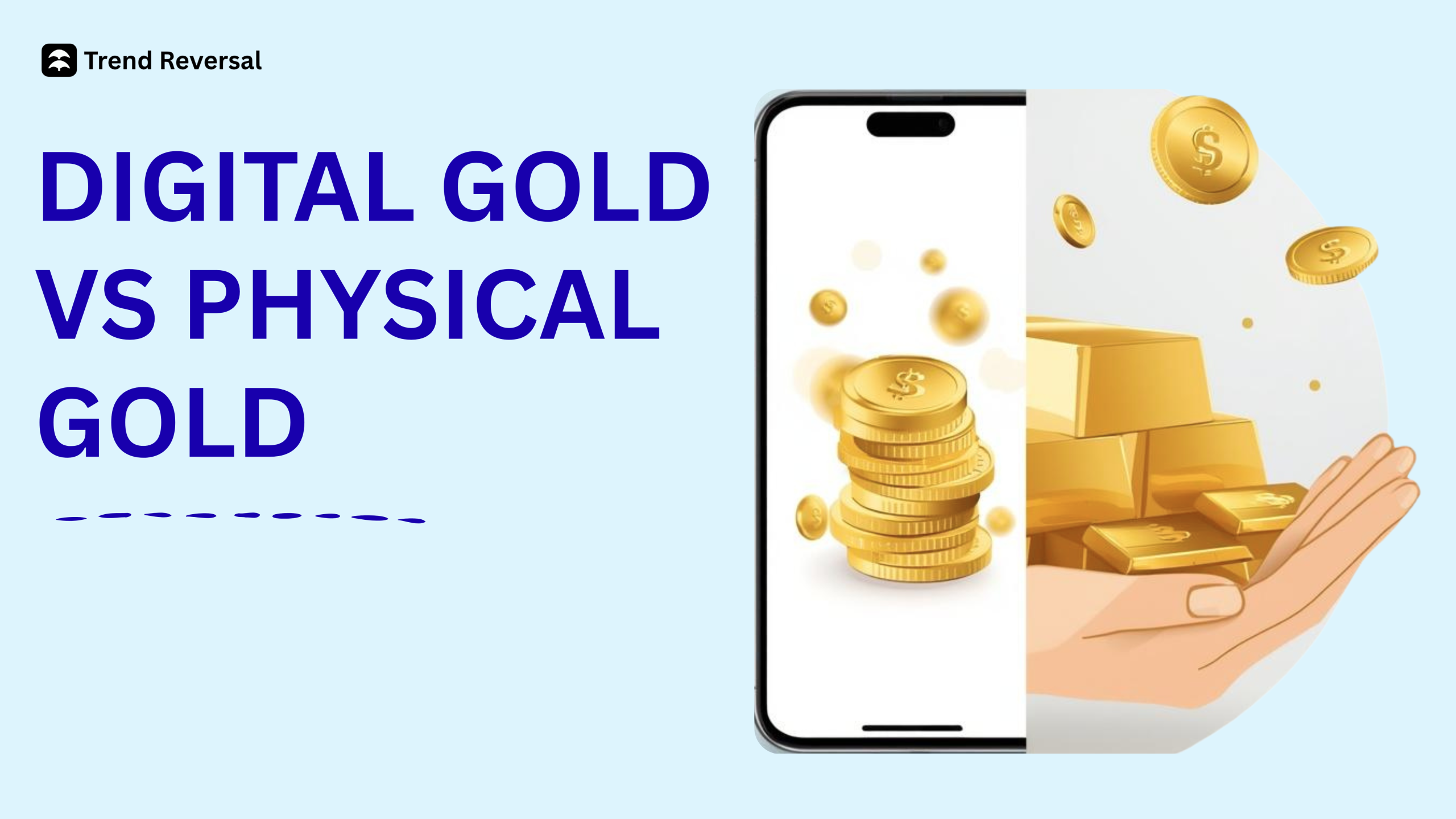
Gold may be timeless, but the way you invest in it has changed dramatically. Think about it, your parents probably bought gold the traditional way: jewellery, coins, maybe a bar or two tucked away in a locker. You, on the other hand, can buy it on your phone in seconds. That’s how much the gold market has evolved. Between ETFs, digital gold, and good old physical gold, investors today have more choice than ever. But with more choice comes more confusion. Which route actually makes sense for you and why?
What exactly do we mean by “digital gold” and “physical gold”?
Before comparing, we must define terms.
Physical gold means tangible gold – bars, coins, bullion, or even jewellery. You hold it (or store it).
Digital gold refers to a scheme in which you hold ownership (legal title) to gold stored in a vault, but the transaction, accounting, and custody are handled online via a platform. You don’t physically possess the metal unless you choose to redeem it.
In many jurisdictions, digital gold is backed by actual gold stored in secure vaults; the provider acts as custodian. In India, for example, many digital gold platforms promise 24K purity and let you buy with very small sums.
Because “digital gold” is still a relatively new term, some confusion overlaps with Gold ETFs, sovereign gold bonds, or gold-based mutual funds. Unlike gold ETFs or bonds, digital gold gives you direct ownership of physical 24K gold stored securely in your name and not just a price-linked financial instrument.
Why Physical Gold Still Matters
For all its convenience, digital gold can’t replace the emotional connection people have with physical gold. There’s comfort in seeing it, touching it, and knowing that it’s yours.
In India, gold is not just an investment but also a tradition. Families buy gold for weddings, festivals, and milestones. It carries memories and often gets passed down through generations.
Still, owning physical gold has its challenges. You have to think about safe storage, insurance, and purity checks. Making and melting charges can reduce returns, and selling takes time since you need to find a jeweller or buyer.
Despite these issues, physical gold remains a trusted choice because it feels real and personal, something you can hold on to, literally.
Digital Gold vs Physical Gold: Head-to-Head
Factor
Digital Gold
Physical Gold
Ownership
Gold stored safely in your name
You hold the gold yourself
Minimum Investment
Starts as low as ₹10-₹100
Usually higher (grams or more)
Storage
Kept in insured vaults
Needs a locker or safe space
Liquidity
Can sell online anytime
Must visit a jeweller or dealer
Purity
Always 24K certified
Depends on hallmarking
Security Risk
Low
Risk of loss or theft
Emotional Value
Low
High
Tax Treatment
Same as physical gold
Capital Gains Tax + GST on Purchase
Convenience or Control – What Do You Value More?
Digital gold is about ease then you can buy, track, and sell in seconds. You don’t worry about storage or safety.
Physical gold gives you control; you can see it, hold it, and use it whenever you want. It’s free from platform or system risks.
If you want simple investing, digital gold is better. If you want something you can pass on or wear, physical gold still wins.
Risks: The Flip Side of Each
Physical gold carries obvious risks, which include theft, loss, and purity issues. Even lockers and insurance don’t eliminate this anxiety entirely.
Digital gold removes those worries but introduces a different kind of dependency or trust in the platform or custodian. Always choose reputable providers and check that your gold is backed 1:1 by physical metal in audited vaults.
In short, with physical gold, the risk is possession; with digital gold, it’s the platform.
Conclusion
Gold will always hold value, but how you buy it depends on what you need.
If you prefer something quick, safe, and easy to manage, digital gold works best. You can invest small amounts, track everything online, and sell anytime.
If you want something you can see and feel – a piece of gold you can gift or keep for the long term, physical gold still makes sense.
Both have their strengths. The smart move is to use digital gold for convenience and physical gold for tradition.
In the end, whether you buy it online or store it in a locker, gold remains what it has always been: a simple, steady way to protect your wealth.
Is digital gold safe?
Yes. It’s backed by physical gold stored in secure, insured vaults. Make sure you buy from trusted platforms
Can I get physical gold from my digital gold holdings?
Yes. You can convert your digital gold into coins or bars and get them delivered to you.
Do both forms give the same returns?
Yes. Both follow the same market price of gold. The main difference lies in costs like making charges or storage fees.
What are the main drawbacks of digital gold?
The main concern is depending on a platform to store your gold. Always choose a verified, regulated provider and check for proper insurance and audit details before investing.