
 Home
Home  Value FDs
  Gold
Gold  Silver
  Bonds
Bonds Value Fixed Deposits
Discover premium fixed deposit solutions with fixed returns of up to 8.10% per year. Trusted FDs. Higher Returns. Complete peace of mind! Start your FD—no bank account required.

 Start With
 ₹1000
 Highly Secured FDs

All banks FDs are Insured by

निक्षेप बीमा एवं ऋण गारंटी निगम
DEPOSIT INSURANCE
AND CREDIT GUARANTEE
CORPORATION
A Wholly Owned Subsidiary Of
भारतीय रिज़र्व बैंक
RESERVE BANK OF INDIA
Fixed Deposit Portfolio
Handpicked from India's most trusted financial institutions, offering you the perfect blend of security and superior returns.

Min Investment ₹
Insured upto 5 Lakhs
Get Up To % Annually

Min Investment ₹
AA+ Rated NBFC
Get Up To % Annually

Min Investment ₹
AAA Rated NBFC
Get Up To % Annually

Min Investment ₹
Insured upto 5 Lakhs
Get Up To % Annually

Min Investment ₹
AA+ Rated NBFC
Get Up To % Annually
GET INVESTED IN 5 EASY STEPS!
Log-In
Create Your Account In Minutes
Choose FD
Choose FD amount, tenure & bank
Complete Verification
PAN, Aadhaar & personal details
Review & Pay
Confirm details and make payment
Invested & Activated
VKYC Completed and FD Created
Log-In
Create Your Account In Minutes.
Choose FD
Choose FD amount, tenure & bank
Complete Verification
PAN, Aadhaar & personal details
Review & Pay
Confirm details and make payment
Invested & Activated
VKYC Completed and FD Created
Compare with Your Favourite Banks


Learnings
See More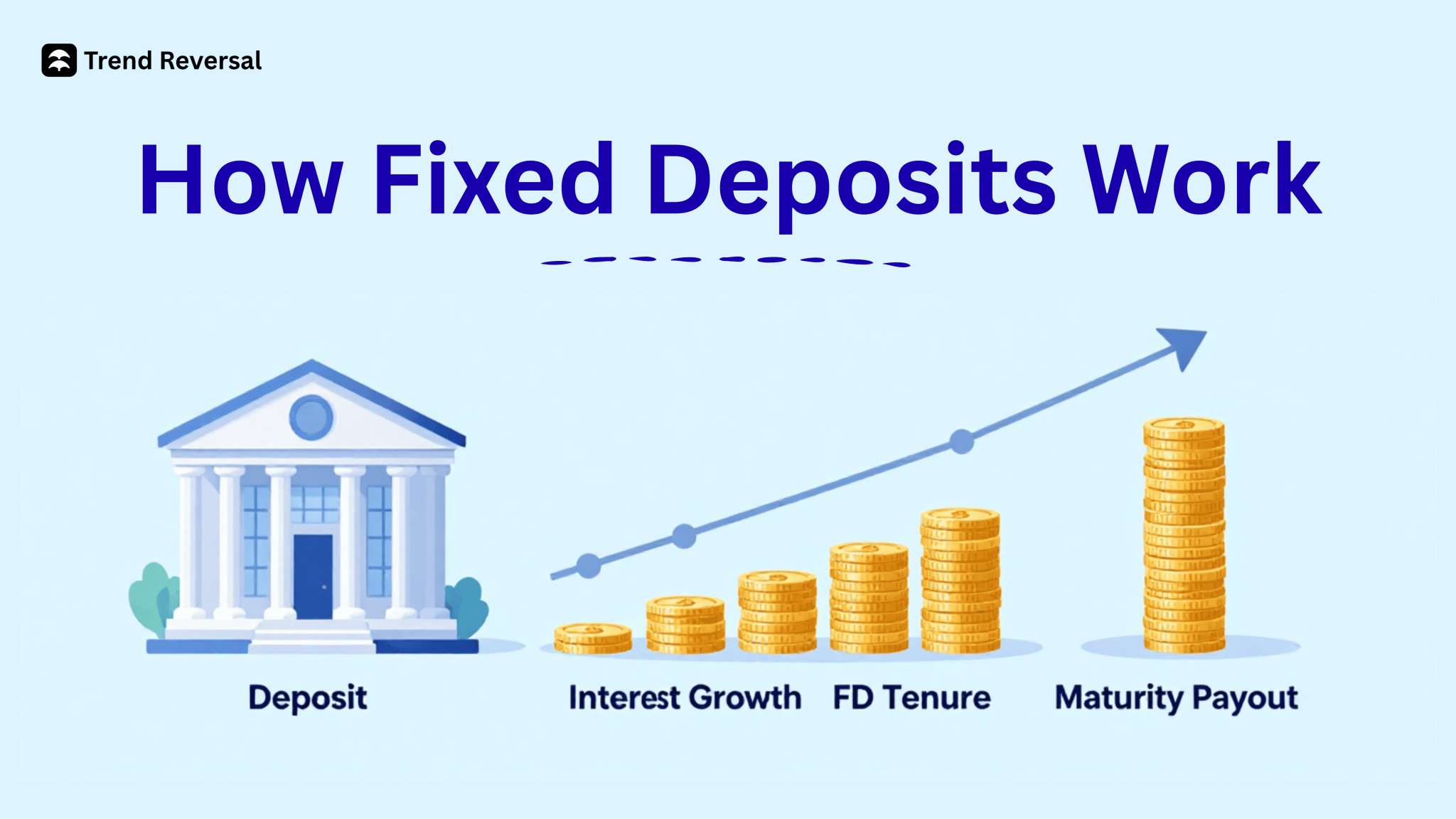
Team Trend Reversal • March 19, 2026
How Fixed Deposits Work: Interest, Tenure, Maturity Explained
↗You’ve probably heard people talk about fixed deposits like they’re the safest place to park your money. They aren’t wrong. They’ve been around for decades, and for good reason. They’re simple, predictable, and easy to understand. You set aside a lump sum for a fixed time, and the bank promises to pay you a fixed interest rate on it. But how do they actually work? Let’s break it down, step by step, without the jargon.

Team Trend Reversal • March 20, 2026
FD Interest Rates in 2026: Best Banks Offering Highest Returns
↗In 2026, the Reserve Bank of India (RBI) maintained the policy repo rate at 5.25%, following a cumulative easing cycle that concluded in late 2026. This reduction aims to stimulate economic growth by making borrowing cheaper and encouraging spending. Consequently, banks have adjusted their fixed deposit (FD) interest rates, often lowering them to align with the new monetary policy stance.
Team Trend Reversal • March 23, 2026
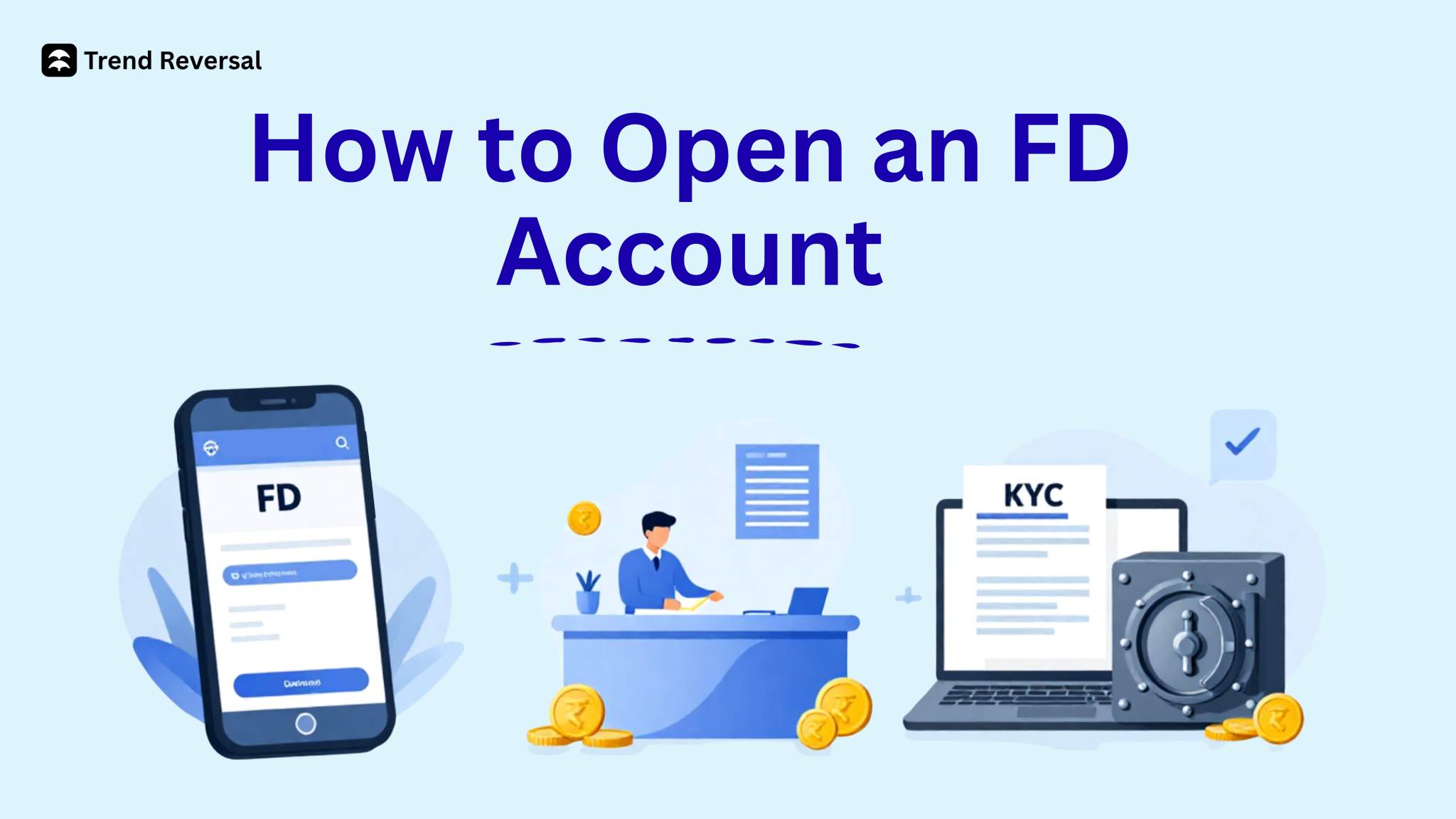
How to Open an FD Account: Step-By-Step Guide
↗For most Indians, a fixed deposit (FD) is the go-to way to build a safe and steady savings cushion. It’s simple, predictable, and offers peace of mind when markets get choppy. But with the RBI’s 2025 rate cuts nudging banks to trim their FD interest rates, it is no longer enough to just park your money with the first bank you find. It pays to compare before you commit.
Team Trend Reversal • March 19, 2026
How Fixed Deposits Work: Interest, Tenure, Maturity Explained
↗You’ve probably heard people talk about fixed deposits like they’re the safest place to park your money. They aren’t wrong. They’ve been around for decades, and for good reason. They’re simple, predictable, and easy to understand. You set aside a lump sum for a fixed time, and the bank promises to pay you a fixed interest rate on it. But how do they actually work? Let’s break it down, step by step, without the jargon.
Team Trend Reversal • March 20, 2026
FD Interest Rates in 2026: Best Banks Offering Highest Returns
↗In 2026, the Reserve Bank of India (RBI) maintained the policy repo rate at 5.25%, following a cumulative easing cycle that concluded in late 2026. This reduction aims to stimulate economic growth by making borrowing cheaper and encouraging spending. Consequently, banks have adjusted their fixed deposit (FD) interest rates, often lowering them to align with the new monetary policy stance.
Team Trend Reversal • March 23, 2026
How to Open an FD Account: Step-By-Step Guide
↗For most Indians, a fixed deposit (FD) is the go-to way to build a safe and steady savings cushion. It’s simple, predictable, and offers peace of mind when markets get choppy. But with the RBI’s 2025 rate cuts nudging banks to trim their FD interest rates, it is no longer enough to just park your money with the first bank you find. It pays to compare before you commit.
Frequently Asked QuestionsFAQs
A Fixed Deposit (FD) is an investment option where you deposit a lump sum for a fixed tenure at a predetermined interest rate
Yes, Fixed Deposits are considered low-risk investments and offer guaranteed returns.
The minimum investment amount varies by issuer, but typically starts from a few thousand rupees.
FD tenures can range from a few days to several years, depending on the bank or financial institution.
Yes, premature withdrawal is allowed, but it may attract a penalty or reduced interest.
Interest on an FD is usually calculated on a simple or compound basis, depending on the scheme.
Yes, interest earned on Fixed Deposits is taxable as per applicable income tax laws.
Most banks allow you to avail a loan or overdraft against your FD at a lower interest rate.
On maturity, you can withdraw the principal and interest or renew the FD for another tenure.
Yes, most banks and platforms allow you to open and manage Fixed Deposits online.